Hardware Wallet vs. Cold Wallet: Are They the Same?
Part of the guide: Keeping your bitcoin safe
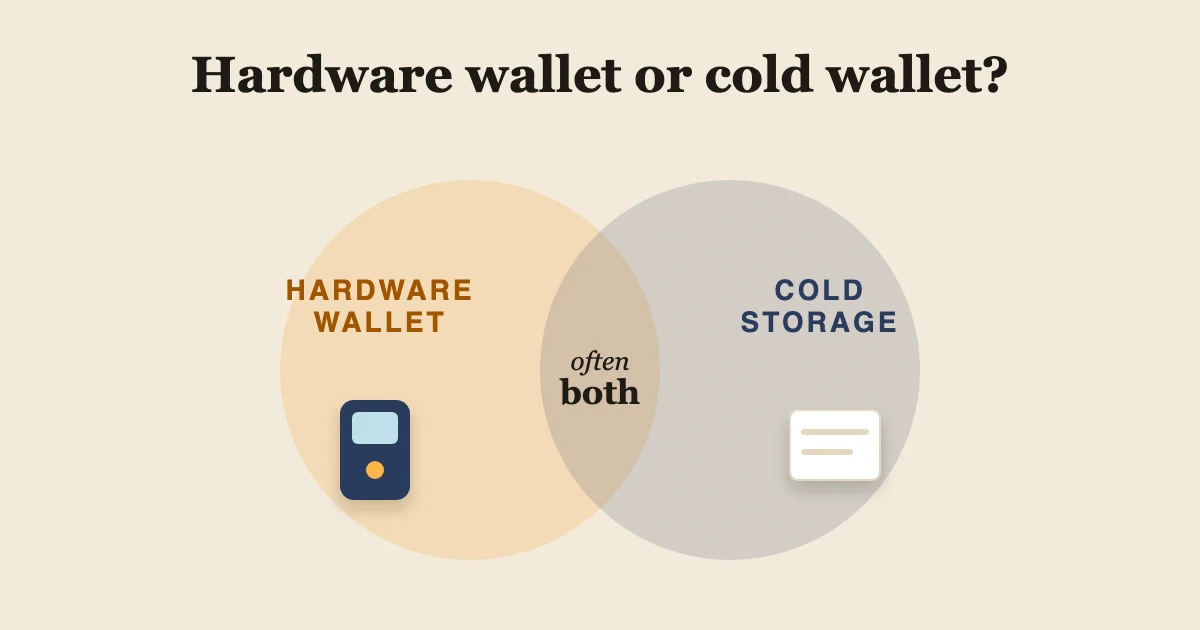
A hardware wallet is like a locked toolbox. Cold storage is the whole workshop kept away from the internet. The toolbox can be part of that workshop, but buying a box does not magically build the room around it.
The 10-second version
- “Hardware wallet” describes a device that keeps keys and signs transactions.
- “Cold wallet” or “cold storage” describes keeping wallet material offline.
- A hardware wallet can be used in a cold setup, but cold storage can also use other arrangements. Backups, passwords and the way you sign still matter.
Bitcoin.org's wallet security guide has separate sections for offline storage, offline transaction signing and hardware wallets. Its wallet chooser explains that wallet control and backup responsibility vary. Both checked October 18, 2026.
A device versus a setup
A hardware wallet is a physical device used to hold or protect private keys and approve transactions. Bitcoin.org lists hardware wallets as one approach under the broader section on offline savings. The key word is “approach.” The device is one piece of a security setup, not a force field.
Cold storage means keeping a wallet in a secured place that is not connected to the network. Bitcoin.org describes offline transaction signing with one computer disconnected from networks and another online computer that can prepare unsigned transactions. The offline computer signs; the connected computer broadcasts the signed transaction. This shows that cold storage is about how keys are kept and used, not just which object you purchased.
A hardware wallet can help keep signing keys away from an internet-connected computer. But if you enter a recovery phrase into a compromised computer, share it with a fake support agent, or lose every backup, the device's label cannot save the day. The same guide says wallet security is the owner's responsibility and recommends backups, encryption and secure locations.
What “cold” does and does not mean
Offline storage reduces some network exposure, not every risk. A person can lose a device, forget a password, expose a backup, or approve the wrong transaction. Bitcoin.org warns password recovery options are limited.
Cold storage can be inconvenient. Spending may involve multiple devices: one prepares a transaction, another signs it, and an online device broadcasts it. Offline at rest does not mean every step happens without a network.
Backups are part of the wallet
The Bitcoin.org guide says backups can protect against computer failures and human mistakes. It explains that some wallets manage multiple keys behind the scenes, so a backup should cover the whole wallet. Many modern deterministic wallets can be restored from a recovery phrase, but the page says to check how your particular wallet handles backups.
It also suggests not relying on one physical location and says online backups should be encrypted. Those are general principles, not a universal setup recipe. The right backup plan depends on the wallet, your ability to maintain it, and who may need access if you cannot.
So are they the same?
No. A hardware wallet is a tool. Cold storage is a way of organizing access so wallet signing material stays offline. Some hardware-wallet setups can be cold storage. A wallet device kept online or used carelessly does not automatically make the whole arrangement cold or safe.
Bitcoin.org's wallet chooser notes that wallets offering full control also make the user responsible for securing and backing up the wallet. If a third party controls your keys instead, you depend on that service. These are different risk choices, not a simple safe-versus-unsafe scoreboard.
What we did not check
We did not test any device, brand, firmware, recovery phrase, or storage method. We do not recommend a product. We did not compare current wallet features or certify any setup as secure.
Sources
- Bitcoin.org: Secure your wallet (checked October 18, 2026)
- Bitcoin.org: Choose your wallet (checked October 18, 2026)