Holding Your Own Bitcoin: The Short, Honest Checklist
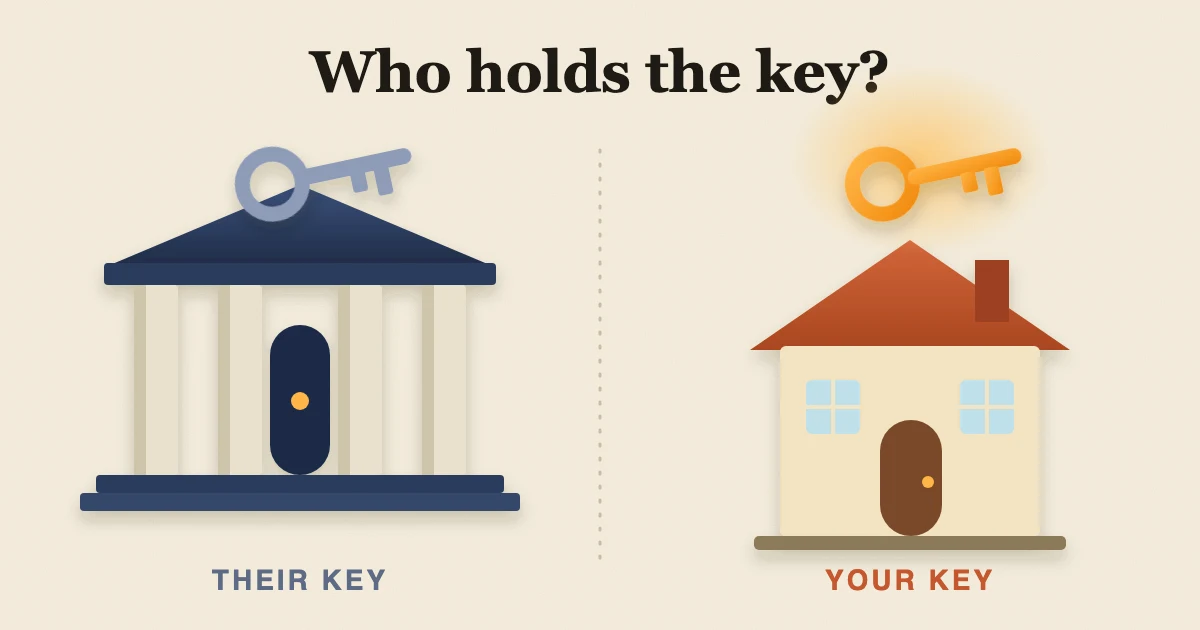
Think of two kinds of money. Cash in your pocket is yours, but you can lose it. Money in a bank is safer from losing, but the bank is in charge. Bitcoin lets you pick. This article is the short version of how to do the "cash in your pocket" kind without losing it.
The 10-second version
- Whoever holds the keys controls the coins. If a company holds your keys, you depend on the company.
- Bitcoin.org says it directly: "When a third party controls your keys, you rely entirely on their security and honesty."
- Holding your own keys moves the risk to you. No company holds your coins for you. Nobody can help you if you lose the backup.
Source: Bitcoin.org, Secure your wallet, checked on October 18, 2026. The checklist below follows the section headings of that page, and a second source, the SEC, is near the end.
The checklist
1. Small amounts for everyday use, bigger savings offline. Bitcoin.org splits wallets into two jobs. A phone wallet is for pocket money. For savings, it describes an offline wallet, also called cold storage, as providing "the highest level of security for savings."
2. Back up your wallet. The page says a single backup of the recovery phrase is enough to restore all past and future addresses, and it suggests keeping copies in more than one physical place, using durable storage media.
3. Encrypt your wallet. Set a password. The page warns that a password with only letters or recognizable words is "very weak." It also says: "You should make sure you never forget the password or your funds will be permanently lost."
4. Encrypt backups that touch the internet. The page says encrypting any backup that is exposed to the network is a good security practice.
5. Keep your software up to date. Newer versions bring "important stability and security fixes."
6. Think about multi-signature. For larger amounts, Bitcoin.org points to multi-signature setups that need more than one key to spend, to protect against theft.
7. Think about your testament. The last heading on the page is about what happens to your coins if you cannot get to them. A plan on paper that someone you trust can find is part of the setup, not an extra.
A second opinion, from the SEC
The US Securities and Exchange Commission published an investor bulletin on crypto custody, and it says the same basic thing in its own words: \u201cWith self-custody, you control your crypto assets and are responsible for managing the private keys to any of your crypto wallets.\u201d It also says a private key cannot be changed or replaced, and that if you lose it, you permanently lose access to the assets in that wallet. That is the same trade this page describes.
What we did not check
We did not test any particular wallet app or hardware device. We are not saying one brand is safe. We also did not check how many people lose coins each year, because we found no primary source for it. Treat any big number you see online as a rumor until someone shows the source.
The honest trade
Holding your own keys removes the risk of a company freezing, losing, or running off with your coins. It adds the risk of you losing a piece of paper. If that sounds scary, using a regulated service is a fair choice too, and the page itself says if you use one, choose it carefully.
Sources
- Bitcoin.org, Secure your wallet (checked October 18, 2026)
- SEC Office of Investor Education: Crypto Asset Custody Basics for Retail Investors (checked October 20, 2026)