Who Is Satoshi Nakamoto? What the Public Record Shows
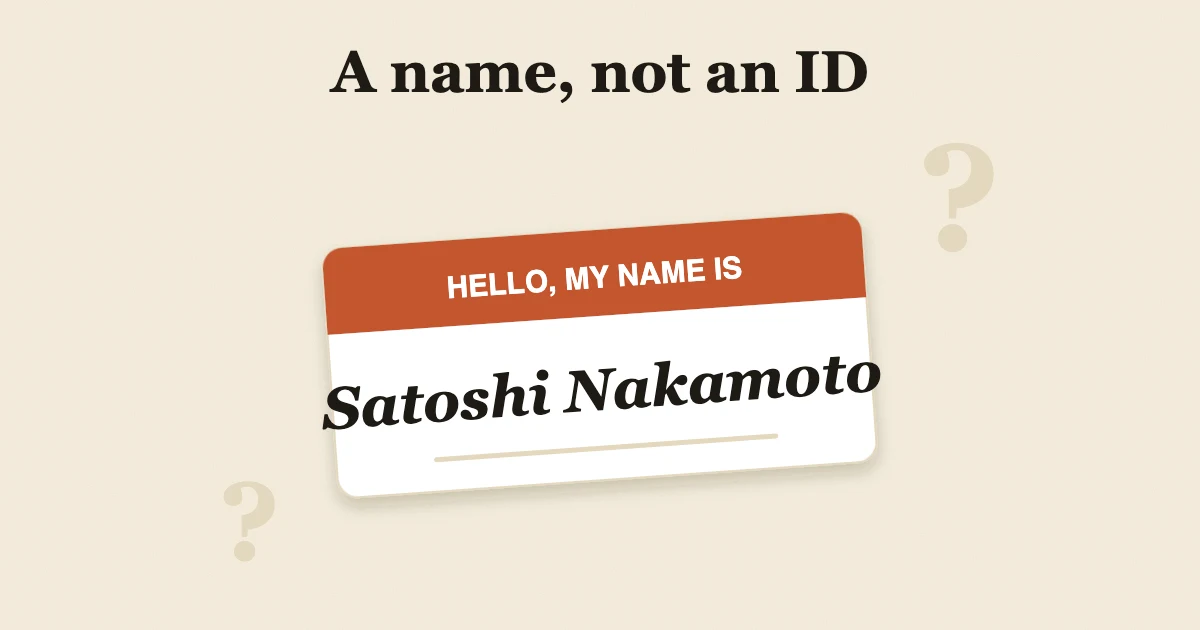
Satoshi Nakamoto is a name attached to a public paper trail, not a verified passport in the sources we checked. Think of a book signed with a pen name: the signature is evidence that the name was used, not proof of the writer's legal identity.
The 10-second version
- The Bitcoin whitepaper's author line says “Satoshi Nakamoto.”
- A mailing-list archive preserves a 2008 post announcing a paper called “Bitcoin P2P e-cash paper,” and a collection of later posts is preserved by the Satoshi Nakamoto Institute.
- Those records document use of the name. They do not establish who the person or people behind it were.
We read the whitepaper, the Satoshi Nakamoto Institute's cryptography email index, and its BitcoinTalk post archive. Checked October 18, 2026.
What the documents say
The whitepaper is titled “Bitcoin: A Peer-to-Peer Electronic Cash System.” Its author line names Satoshi Nakamoto. That is a primary document for what the published paper says. It does not provide a verified legal name or biography.
The Satoshi Nakamoto Institute's cryptography email index lists “Bitcoin P2P e-cash paper” on October 31, 2008, followed by later entries with the same title. We checked the index, not every individual message, so it cannot alone prove who sent them.
The Institute's BitcoinTalk archive lists posts under the Satoshi Nakamoto name, with dates and subjects. For example, the page displays posts in late 2009 and early 2010. This documents that the handle appeared in the archived forum record. The archive does not authenticate the person behind the handle.
What remains unknown here
The sources we opened do not identify a legal person behind the name. They do not prove whether one person or a group used it, where that person lived, or why the name was chosen. These are unknown from the documents examined here.
Many real people have been named in public speculation about Satoshi. We will not repeat or accuse any of them. A matching writing style, technical background, or personal story would not be proof of authorship. Naming a person without direct evidence can cause real harm and does not make the historical record clearer.
We also did not verify the complete authenticity of every archived email or forum entry. The whitepaper and archive pages are accessible records; an archive's existence is not the same as independent identity verification. The careful claim is modest: public materials use the name Satoshi Nakamoto in connection with Bitcoin's early design and discussion.
Why the distinction matters
We can say what a page shows, the date it lists, and the title in an archive. We should stop before turning those facts into an unsupported biography.
That boundary is useful beyond Bitcoin. A pseudonym can have a public body of work while the legal identity remains unknown. Curiosity is fair. Guessing a real person's identity and presenting it as fact is not.
What we did not check
We did not investigate private emails, IP addresses, writing-style analyses, alleged personal identities, or unarchived records. We did not verify every original mailing-list message or forum post individually.
Sources
- Bitcoin whitepaper (checked October 18, 2026)
- Satoshi Nakamoto Institute: Cryptography mailing-list emails (checked October 18, 2026)
- Satoshi Nakamoto Institute: BitcoinTalk posts (checked October 18, 2026)